

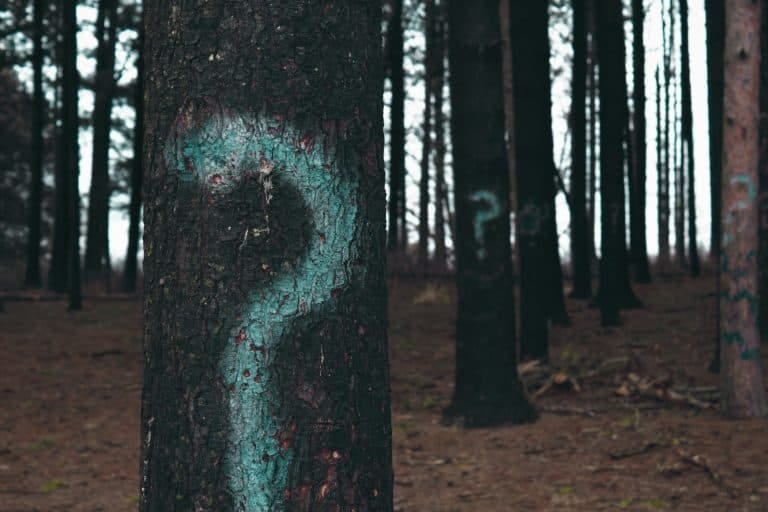
Everyone feels stuck sometimes. You win by getting through it, not by pretending you never were.
But stuck wears a lot of costumes. Sometimes it’s rumination. Sometimes it’s burnout, grief, depression, or the particular inertia that comes with ADHD or autistic shutdown. Sometimes it’s your body telling you something your mind hasn’t caught up to yet. The way out depends on which version you’re dealing with.
Here are ten questions to help you sit with whichever version you're in.
1. What do I know to be true?
What do you believe beyond doubt or skepticism? It might be a short list. It might fill several pages in a journal. Whatever it is, it’s your truth.
Your truth can be different from other people’s, and probably will be. Think about a major world problem: climate change, a refugee crisis, lack of clean water, or literacy. Which matters most? Ask five people and you’ll get five answers, but none of them are wrong. They’re each a person’s truth.
2. What are my guiding values?
Be specific, and pick only a few. Choosing values is about prioritization. Almost every company in the world lists “excellence” as a core value, but what does that even mean? It’s like telling the genie your wish is for unlimited wishes. Nice try. He’s heard that one before.
When you pick only two or three values, you have to make hard choices. Is it more important to be curious or brave? Generous or kind? The differences are subtle but significant, and when you know your answers, decisions get easier.
3. What am I avoiding, and what is the avoidance costing me?
Stuck often has a specific texture: there’s a thing you’re not looking at. A conversation, a decision, a piece of work, a truth about a relationship. The avoidance feels like safety, but it’s usually the thing doing the sticking.
You don’t have to do the thing today—but try naming it. Name what it’s costing you in energy, sleep, focus, or self-respect. Sometimes naming the cost is enough to shift it. Sometimes it just clarifies that the cost of avoiding is higher than the cost of doing.
4. What am I pretending not to know?
This one is close to the avoidance question but sharper. Often when we feel stuck, we already know the answer. We just don’t want it to be the answer.
You know the relationship isn’t working. You know the job is wrong for you. You know the project you keep not starting is the one you actually want to do. The stuck-ness isn’t really confusion. It’s the gap between what you know and what you’re willing to act on.
Naming what you’re pretending not to know doesn’t mean you have to do anything about it yet. But you can’t act on something you haven’t admitted.
5. Since I don’t know how much time I have, what should I do with it?
You don't know how much time you have left. Could be decades, could be less—but you don’t know with any certainty. Life can be taken without warning, or you could live to 115.
Given the uncertainty and the lack of a reliable countdown clock, what changes do you want to make? What dreams are still unfulfilled? What troubles you that you keep pushing to next quarter, next year, next someday?
6. What would I tell a friend in my exact situation?
We tend to be more generous and clear-eyed with other people than with ourselves. A friend comes to you with your exact problem and you’d know what to say. You’d be kind, you’d see the way forward, you’d remind them of what they already know.
Try turning that lens around. What would you tell them? Now: why is that advice not for you? The answer is usually revealing.
7. Who haven’t I talked to about this?
Stuck thrives in isolation. The longer you sit with something alone, the bigger and more intractable it gets. Often the thing that finally shifts it isn’t a new insight, but a conversation.
Is there someone who would actually get it? Someone who’s been through something similar, someone whose judgment you trust, someone who won’t just tell you what you want to hear? You don’t need a whole support network. You need one honest conversation.
8. What does my body say?
Stuck often shows up in the body before it shows up in your thinking. Tension, exhaustion, the dread that sits in your chest when you open your laptop. A sleep pattern that’s off. The specific kind of tired that rest doesn’t fix.
Your body isn’t separate from your mental health. It’s often the first place you can read it. Before analyzing your stuck-ness, check in with what you’re actually feeling physically. The answer might not be another question. It might be water, food, a walk, or an honest look at how much you’ve been asking of yourself.
9. Do I have any regrets?
Like fear, regret is better faced than left to linger. If there’s something you wish you’d done differently, or just done at all, is it too late?
If it’s not too late, maybe it’s time to do the work.
If it is too late, think about how to avoid those situations in the future, and grant yourself some grace. We can’t change the past, and some things can’t be fixed. Live for today and build for tomorrow.
10. What is something I MUST do, no matter how difficult it is?
Warning: an honest answer to this question might change your life.
In my case, it’s what led me to visit every country in the world. More than any other reason (love of travel, goal-setting, compulsive personality, “it just seemed fun”), once I realized the idea wouldn’t leave me alone, it became something I simply had to take on.
Is there anything like that for you? If you’re ignoring it, or telling yourself you’ll get back to it when you have time, that might be exactly why you feel stuck.
And if your answer seems irrational, or if it isn’t one that everyone around you understands, you might really be on to something.
These are all great. #6 hit me the hardest. No one can beat me up the way I can. Am going to really work on this one.
As I wander around between my work a mental health clinician, my clients and coworkers, my home filled with my daughter and her family , my recovery journey and my own personal projects - I hear things calling me - waiting for me to do, make, learn and discover & I don’t know where to start sorting it out …. These questions are a good start…. Writing is calling me ☮️🌏🙏🏽