

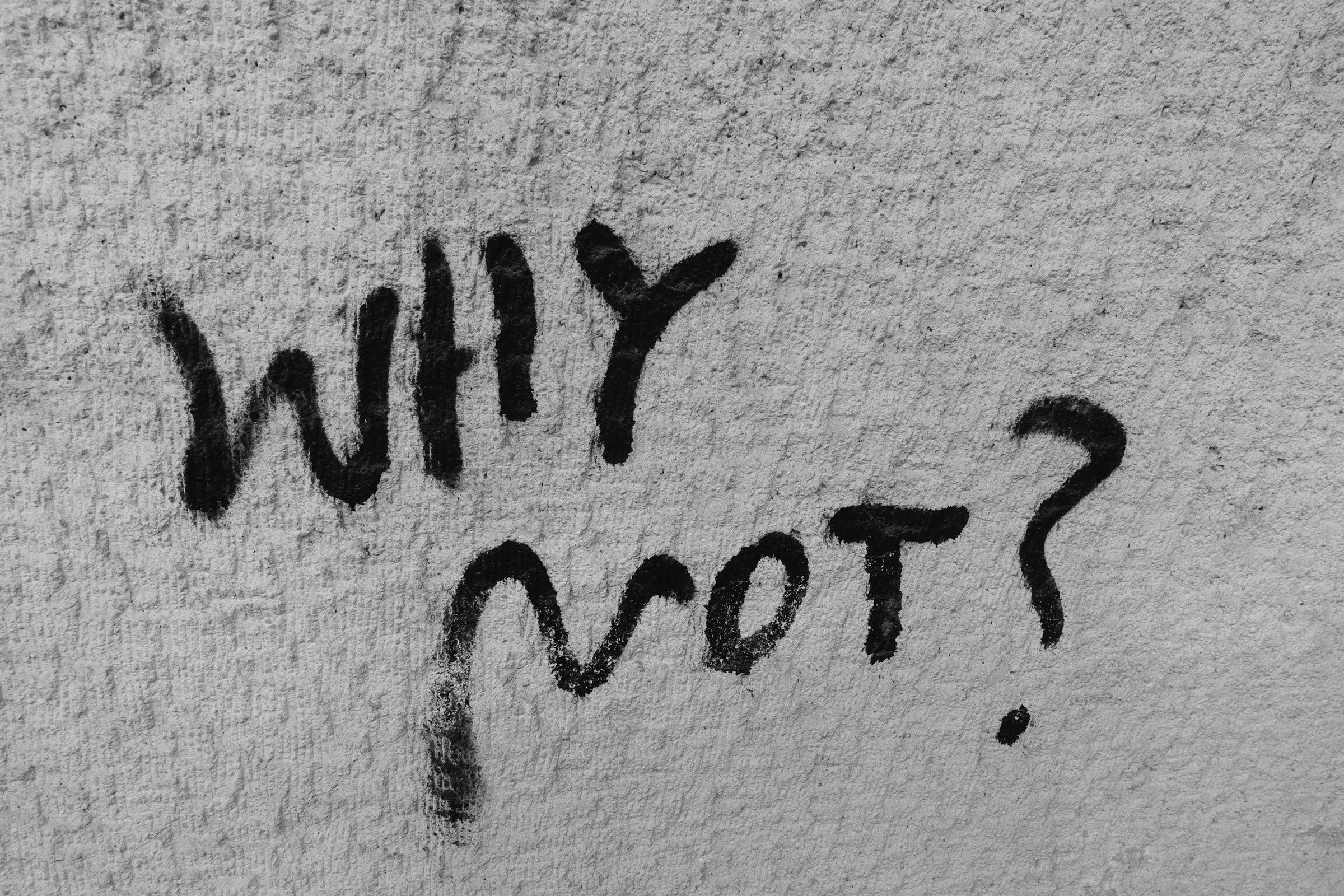
When I was in graduate school I had to complete a series of required courses and a number of electives. I enjoyed some of both, but in my second year, there was a required course on research methods that I wasn’t looking forward to. In fact, I was actively dreading it.
I’d already done a very similar course in an earlier grad school experience. But those credits didn’t transfer over, so I was essentially starting fresh. I’d need to sit through all the lectures, spend a good amount of time choosing a pretend research topic, and put in a lot of busywork. (I like working hard, but I hate busywork.)
Alas, there was no way around it—or was there?
Reading the grad school handbook, I discovered a brief section on coursework exemptions. It seemed, from what I read, that the purpose of the research methods class was to teach people how to conduct research that met the requirements of scholarly journals.
Most students wouldn’t go on to publish in those journals; this skill was just something they had to learn to write a master’s thesis and then graduate. But years earlier, I had actually published several articles in peer-reviewed journals. Being scholarly articles, one ever read them, but that didn’t matter.
Reading between the lines of the handbook, it seemed that if I could prove my competence in the outcome of the course, I could get out of actually taking it. Would it work, though? It almost seemed too easy.
I dutifully made an appointment and then visited the academic advisor who was in charge of such decisions. She was skeptical at first, but then I presented the actual journals. I always knew these would be good for something, I told her.
Even with the evidence in hand, I was worried my request would still be denied—the advisor would defer the decision to some anonymous committee, and the committee would come up with some reason to turn me down—but to my surprise, the advisor shrugged and said “Works for me.” She wrote a short email to my course supervisor explaining that I wasn’t required to take the class that all my peers were enrolled in. I was free!
It’s hard to overstate the joy I felt in succeeding at my advocacy campaign.
The biggest benefit: I immediately earned back several dozen hours of free time. Technically, I had “purchased” this time thanks to my early efforts in writing academic articles no one would ever read, and then in seeing through the process of actually asking for an exemption. Still, for the present-tense version of myself, it was free time.
At first, I felt sneaky about it—all my peers had to take that class! But then I realized I should feel proud. Every Tuesday, while they sat through lectures, I was doing whatever I wanted. This time was mine.
That’s right, I remembered. I would have been in class, but I was exempt.
And here’s the thing: I almost didn’t ask! To go through the advocacy process I had to ask for something I wasn’t sure I would get. I had to face the prospect of rejection, of getting excited and then feeling deflated, and potentially weakening my ability to ask for anything else that I wanted later.
More than once, I thought, “Is it really that big of a deal to take this class? My friends will be there, so we’ll all be in it together.”
And maybe it would have been fine—but I got to see my friends in other classes, and the time I gained felt gleeful.
Fortunately, I overcame this resistance.

The grad school victory taught me something important: many barriers only exist because we assume they do. In that case, the fast-track hack was to get out of something undesirable. But you can also think about being fast-tracked to get placed into something you want.
Consider a sign that reads “reserved”—what does it really mean?
Many people assume it means “Keep away, this place isn’t for you.” If you walk into a restaurant, an airline lounge, or any other place of business, you might think this designated space is off limits.
But what if no other place in the room is free? What if the space remains unoccupied for the duration of your visit? What if you want to sit there—then what?
When you encounter the reserved sign, you could keep your distance as most people do. You could also just ignore it and sit yourself down—but that doesn’t always end well. (Airline forums often feature reports of “self-upgraders” who try to take empty seats in First Class. Inevitably, they’re sent to the back by flight crews who know where everyone is supposed to sit.)
But instead of door number 1 or 2, you can choose a third option and simply ask the person in charge, “May I sit in the reserved section?”
Once you learn you can ask for things—and the worst that happens is you’re told “no,” you might start asking for a lot more!
You too can skip prerequisites, requirements, and busywork of all kinds.
You can gain access to parts and sections of life that seem to be out of bounds.
When you start asking for what you want—and realize the worst outcome is simply hearing 'no'—entire sections of life suddenly become accessible.
The only question is: what will you ask for first?
This made for a very inspiring read, thank you for sharing it Chris. Something that came up for me when reading this is I've heard a lot of people (including my dad) say that younger people are entitled these days. I think this feeds into my fear of asking bold questions. But I am working on overcoming that fear and I appreciate your inspiration.
Wow! The most powerful part was at the end for me. "When you start asking for what you want—and realize the worst outcome is simply hearing 'no'—entire sections of life suddenly become accessible."
It's crazy how resistance to hearing that one word "no" stops so many people (including me) from asking for things. It made me imagine how being immune to the word "no" could actually be life changing. Thanks for this post!