

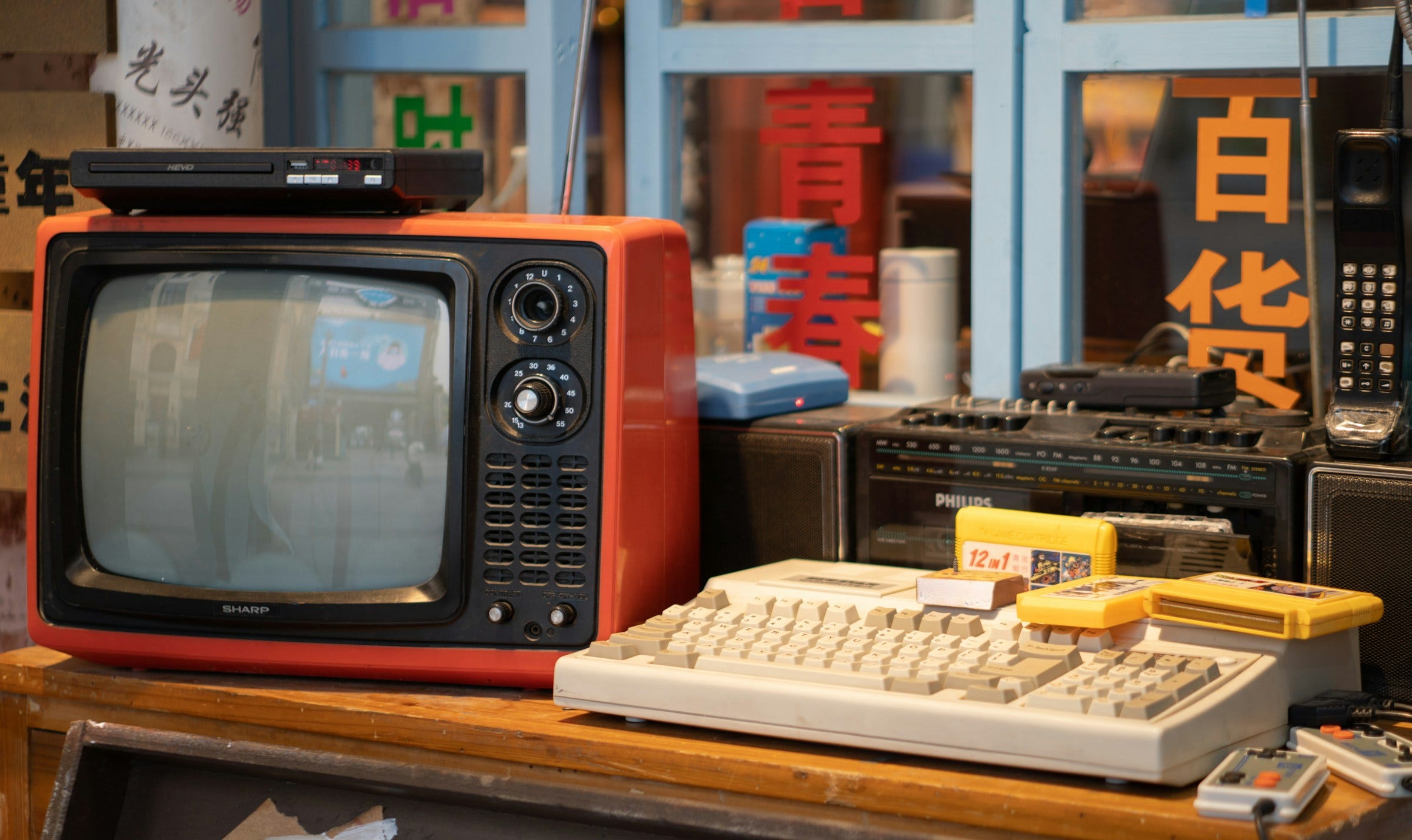
One time in my late teens, my brother and I found a video game emulator—basically a device that let us play a bunch of old games that had come out when we were kids. We hooked it up to a TV and could choose from hundreds of games, which seemed both incredible and overwhelming.
For the first couple of hours, it was a blast to scroll through dozens of titles and play different games from our past. But before long we started to notice a theme: a lot of these games sucked. They were basic and overly simple compared to modern games.
In our shared memory, the games were awesome. But when we went back to play them, we soon realized they were awesome for their time.
Overall, we came to believe, modern games were simply better. (And that was 20 years ago. Another generational change has brought about even better games.)
The interesting thing wasn’t just that the games felt worse. It was that our memory of them was wrong.
We weren’t lying to ourselves. At the time, those games really did feel incredible. But memory compresses things. It keeps the feeling and forgets the limitations.
Years later I encountered this same idea in a completely different context—one that had nothing to do with video games.
The Way We Never Were
When I was studying sociology in graduate school, one of my seminars covered a book that stuck with me. It was called The Way We Never Were. Killer title, right? The subtitle is also great: American Families and the Nostalgia Trap. The title and subtitle sum up the book’s thesis: that we look to the past with rose-colored glasses.
Specifically, the “traditional family” invoked in modern political and cultural debates is largely a historical myth. But according to the historical record, that version of family life was the exception, not the rule.
Families had always been messy and varied—multi-generational households, kids working outside the home, high rates of death and remarriage. The neat suburban model many people remember existed for only a brief period, made possible by unusually strong economic conditions after World War II.
Whenever people talk about “the way things used to be,” it pays to be skeptical. It’s not only that many things are better now—like with video games— it’s that the way we think about the past is often flawed and inaccurate.
Psychologists use the term “rosy retrospection” to describe the tendency to evaluate past events more favorably when remembering them than when experiencing them in the moment.1
Once you notice this tendency, you start seeing it everywhere. People say music used to be better. Movies used to be better. Cities used to be safer. Kids used to behave. (Have kids ever behaved?) Sometimes there’s truth in these claims, but just as often we’re comparing today’s reality to a past that has already been polished by memory.
Nostalgia isn’t just remembering the past. It’s remembering an edited version of the past.
The past often looks better because memory is an excellent editor. It keeps the highlight reel and quietly deletes the frustrating parts.
In the case of those old games, memory preserved the excitement of discovering them. It didn’t preserve the repetitive levels, the awkward controls, or the hours spent trying to figure out what you were supposed to do next.
The same thing happens with decades. We remember the music, the friendships, the feeling of possibility. We forget the boredom, the uncertainty, and all the things that annoyed us at the time.
Nothing is ever quite as good as we remember it—because memory has already improved it.
https://en.wikipedia.org/wiki/Rosy_retrospection
One of my favorite comments is “the older we get, the better we were”. A close second is “nostalgia is the most powerful drug”. I think fond remembrance and longing for the way things were is inextricably linked to the safety of knowing how things turned out. You see this with all things cultural; movies, music and art. Conservative people tend to eschew the avant garde as dangerous - Elvis is a perfect example - but when he became mainstream and later dead, he became a hero of the same people who’s parents likely condemned him for is morality busting swiveling hips. Aging and becoming weaker also tends to make people cling to what they know. It takes a lot of energy and courage to face an uncertain future. What we do know for certain is that change is the only constant and you can never truly go backwards in time.
I wrote a post about this one time. I grew up in the early 1950s. I remember it very nostalgically, probably because of television shows, like The Donna Reed Show and Leave It to Beaver. But we had to crawl under our desks and put our hands over our heads in school "just in case" there was a danger from Khruschev's Russia. An air raid siren went off every Tuesday as a test. Some people built bomb shelters in their backyards. There was definite anxiety all around.